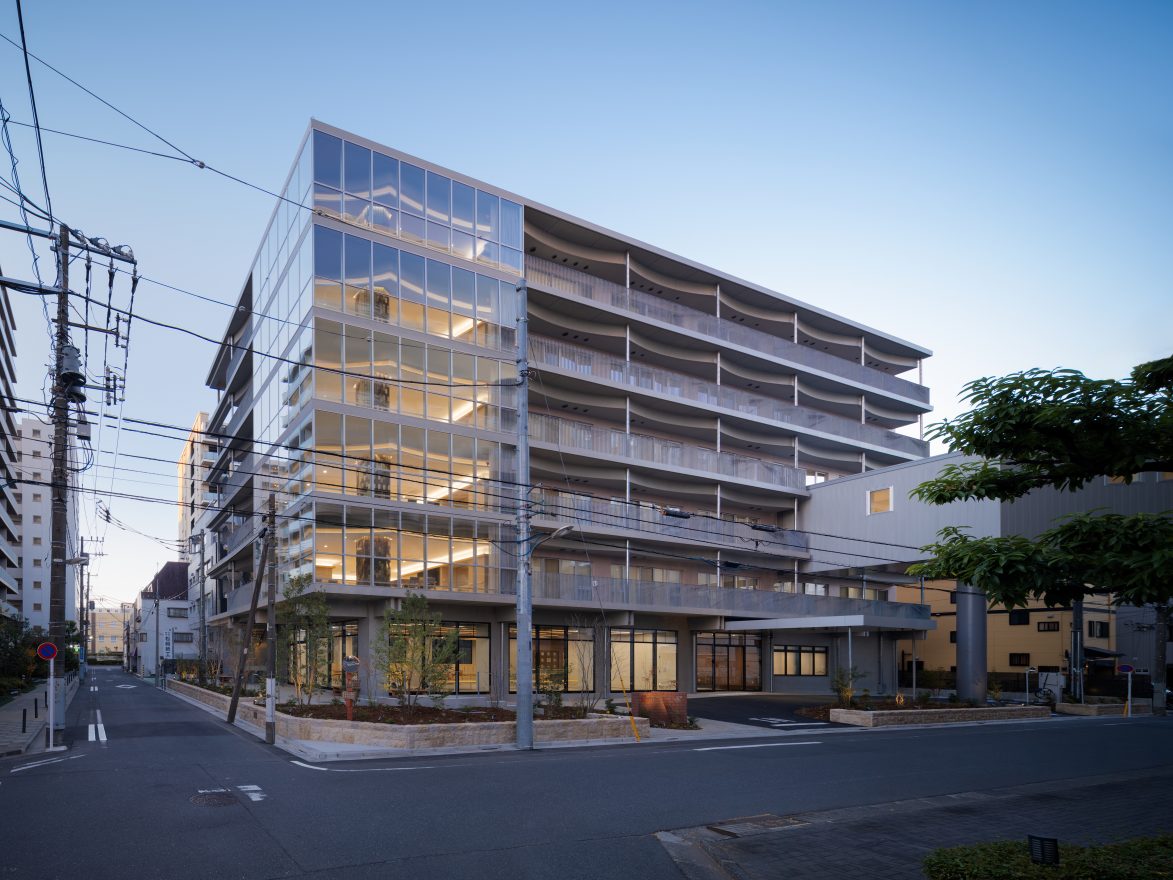
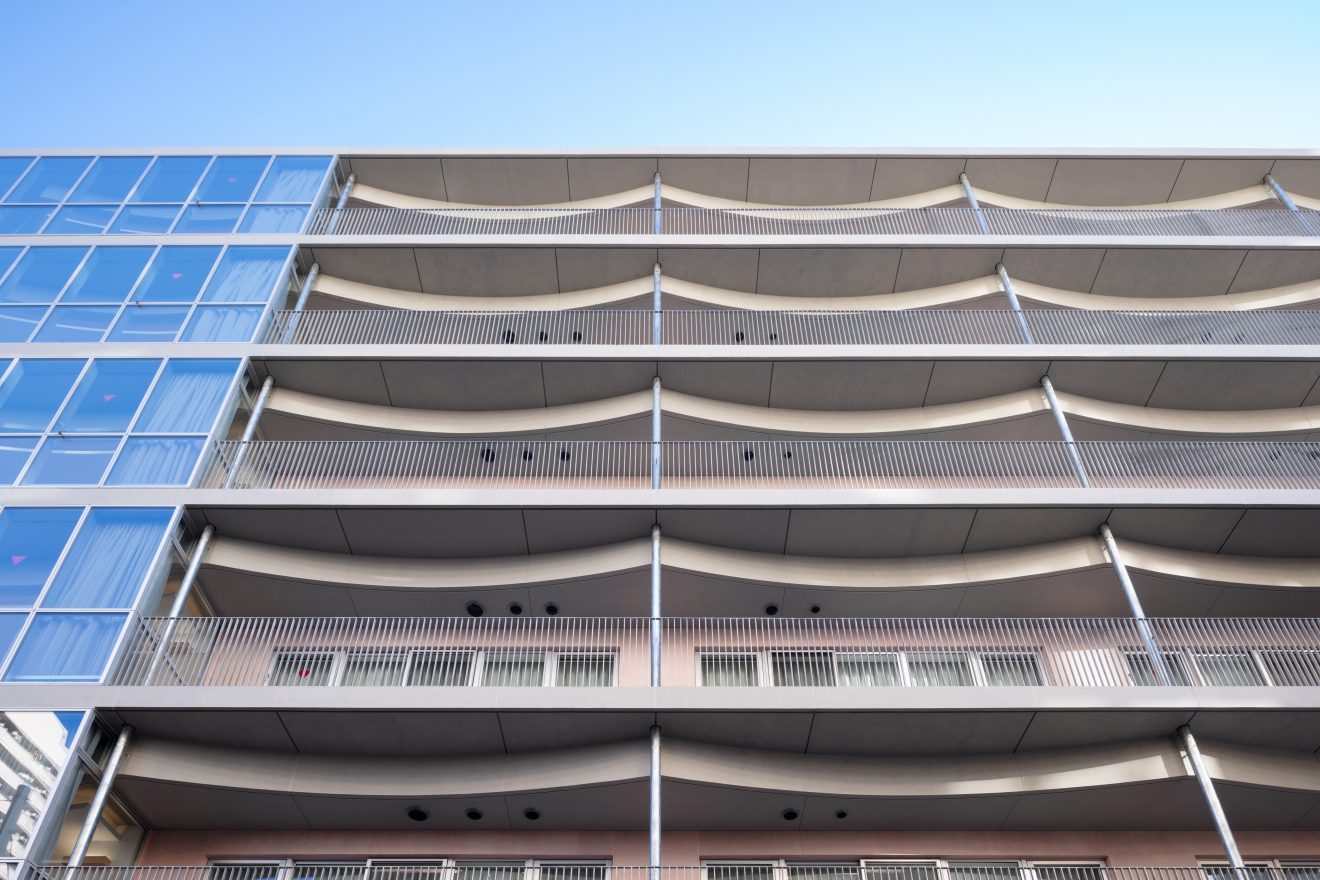
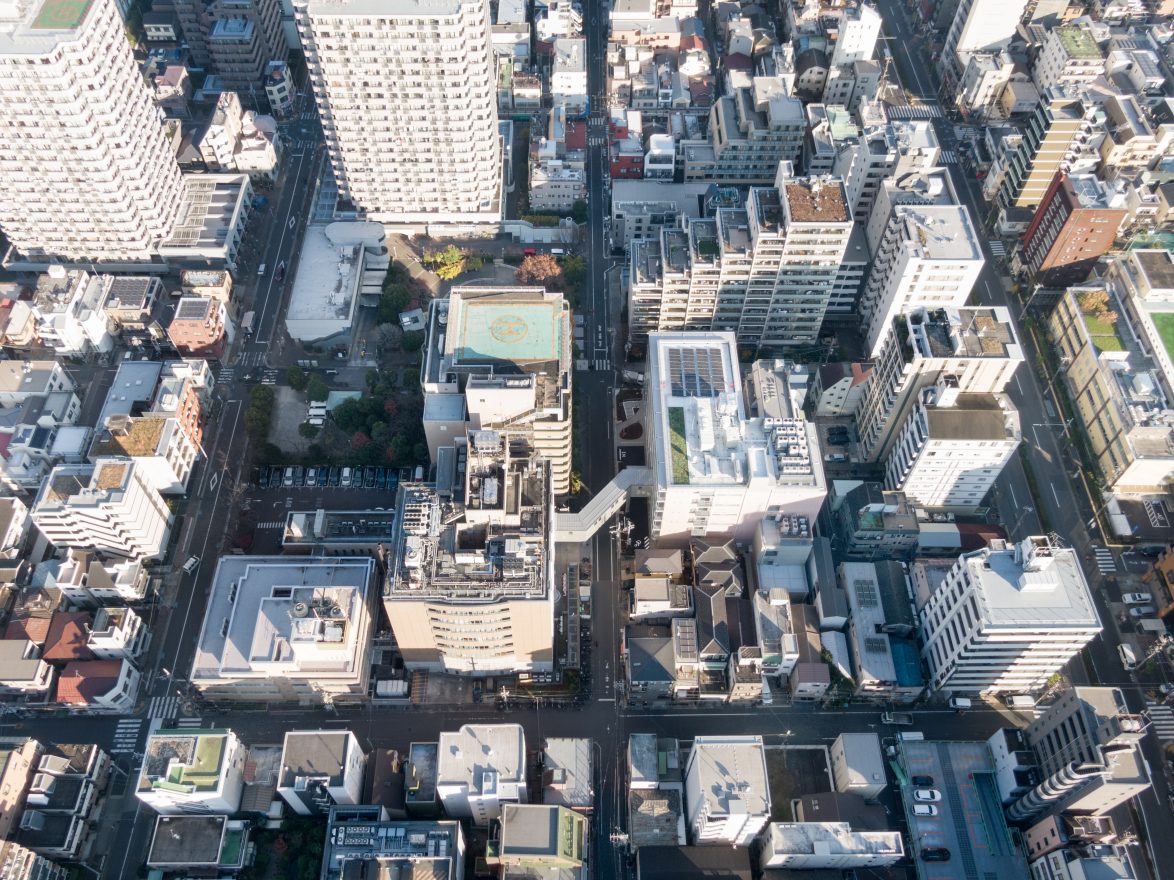
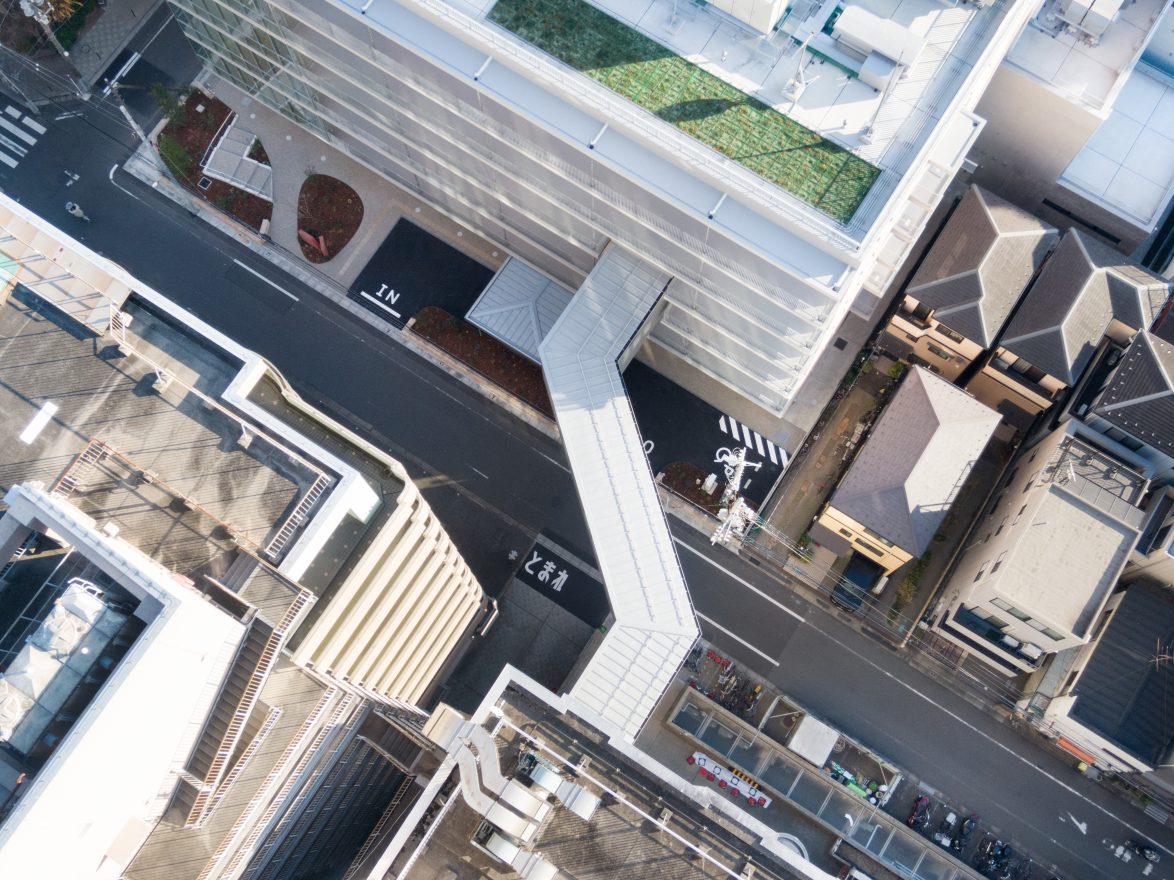
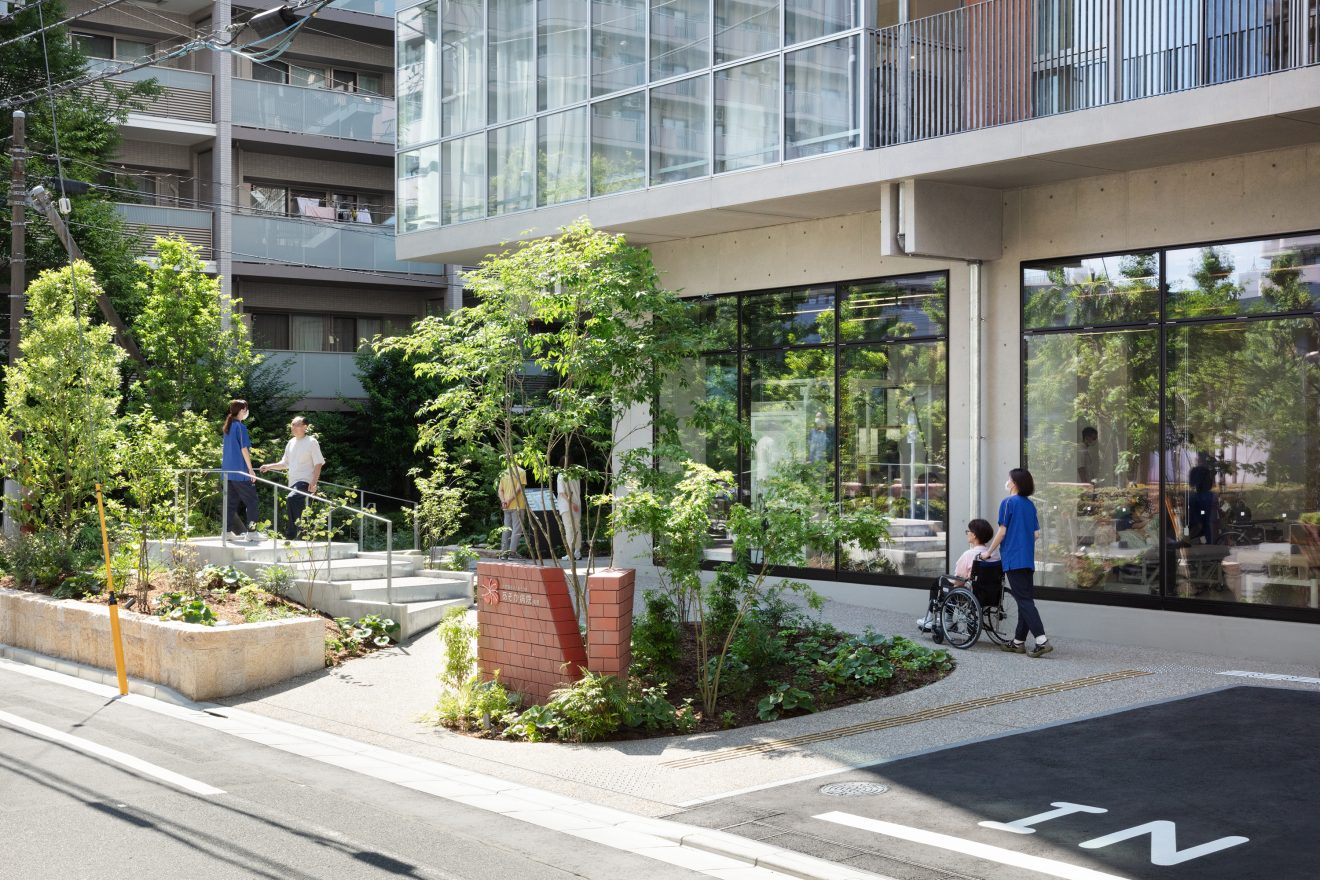
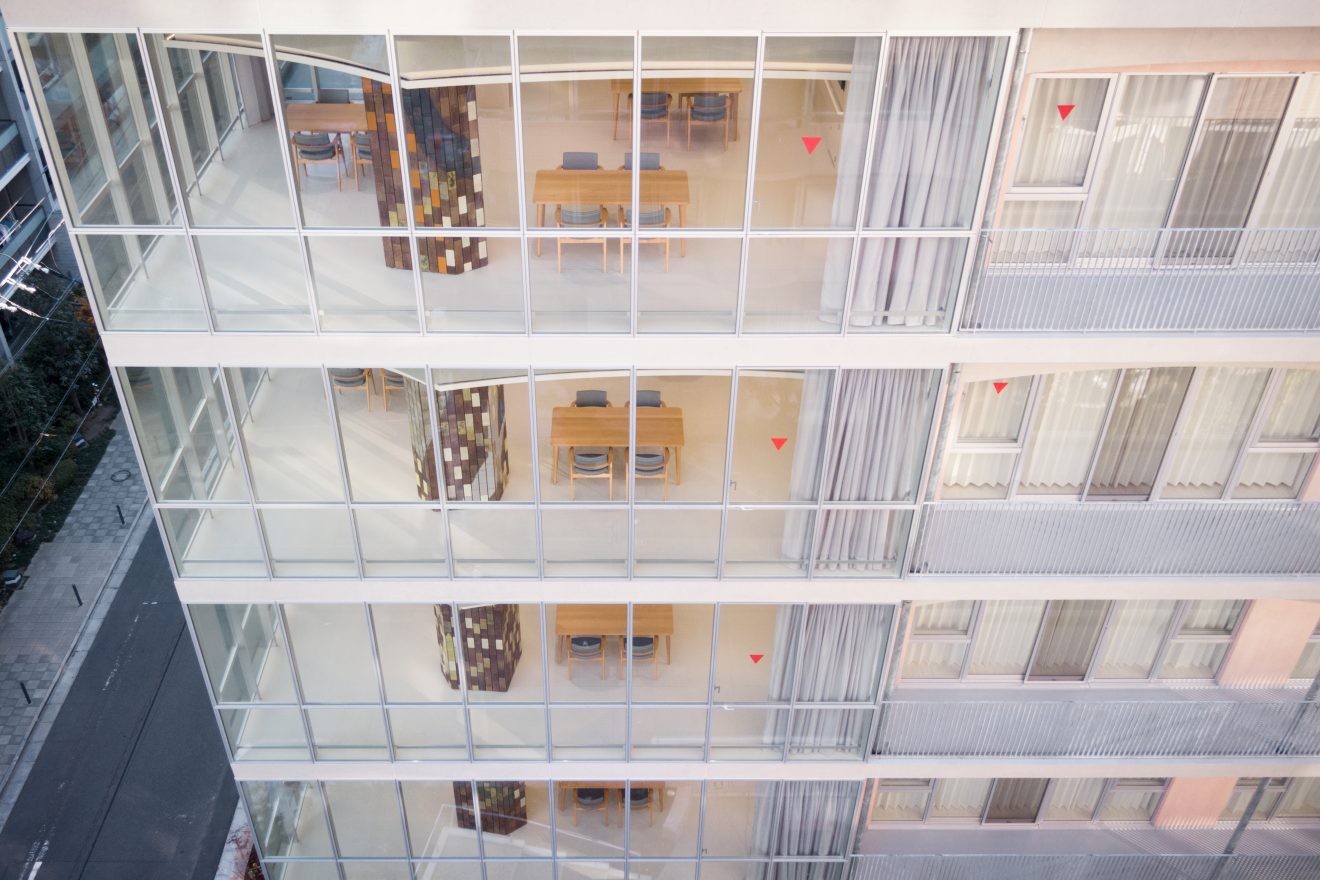
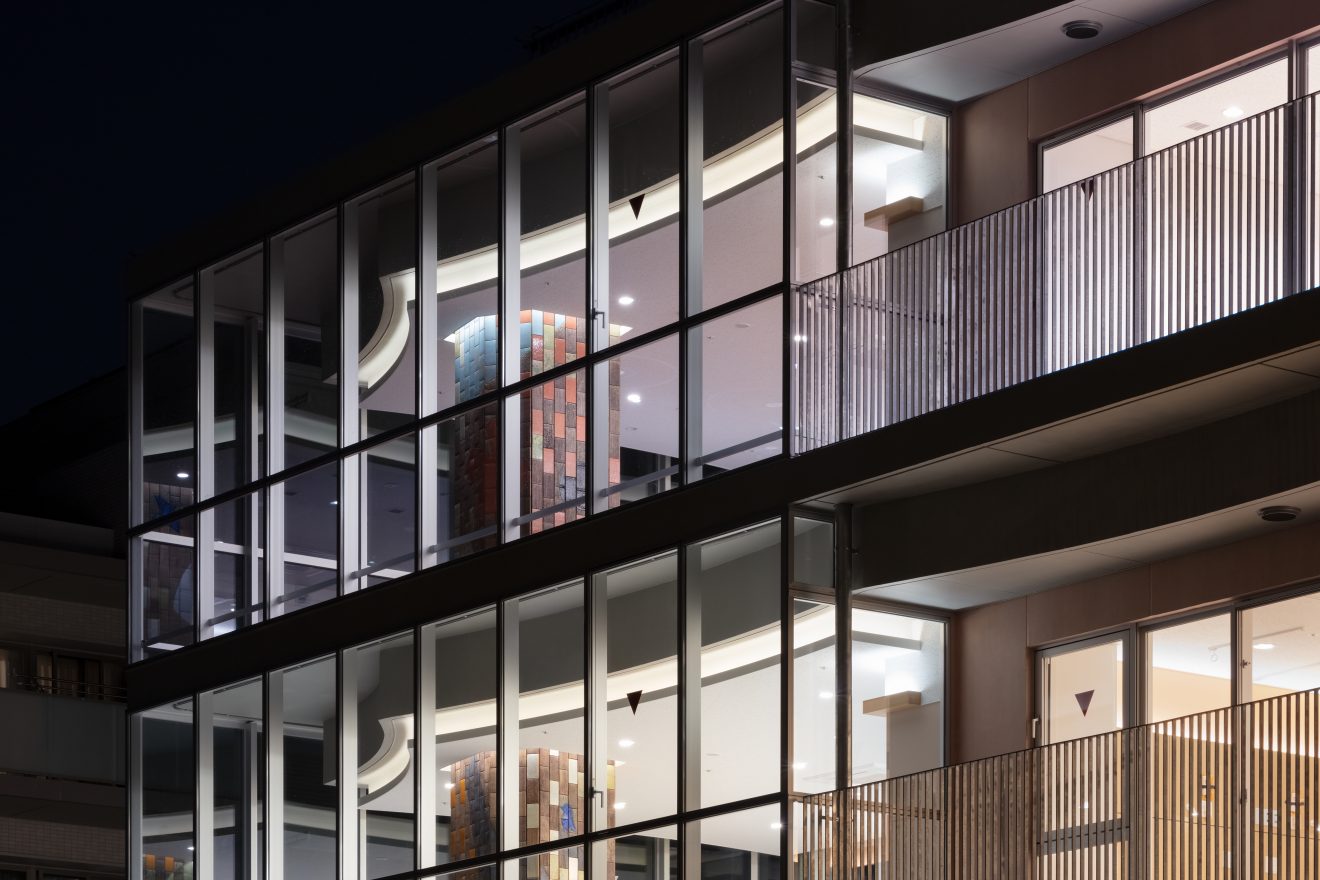
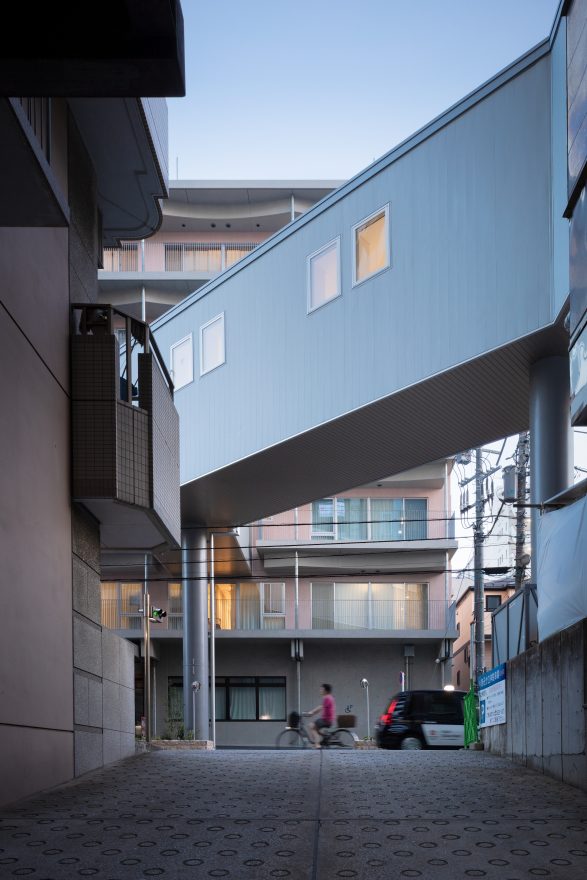
The site, previously occupied by Asoka-en, is connected to the main building across the road via a covered walkway. Beyond functional integration with the hospital’s wards and outpatient services, the South Wing plays a critical role as a temporary facility during renovations of the aging main building. Its exterior, featuring a reddish-beige tone and curved forms, harmonizes with the main building while blending seamlessly into the urban landscape.
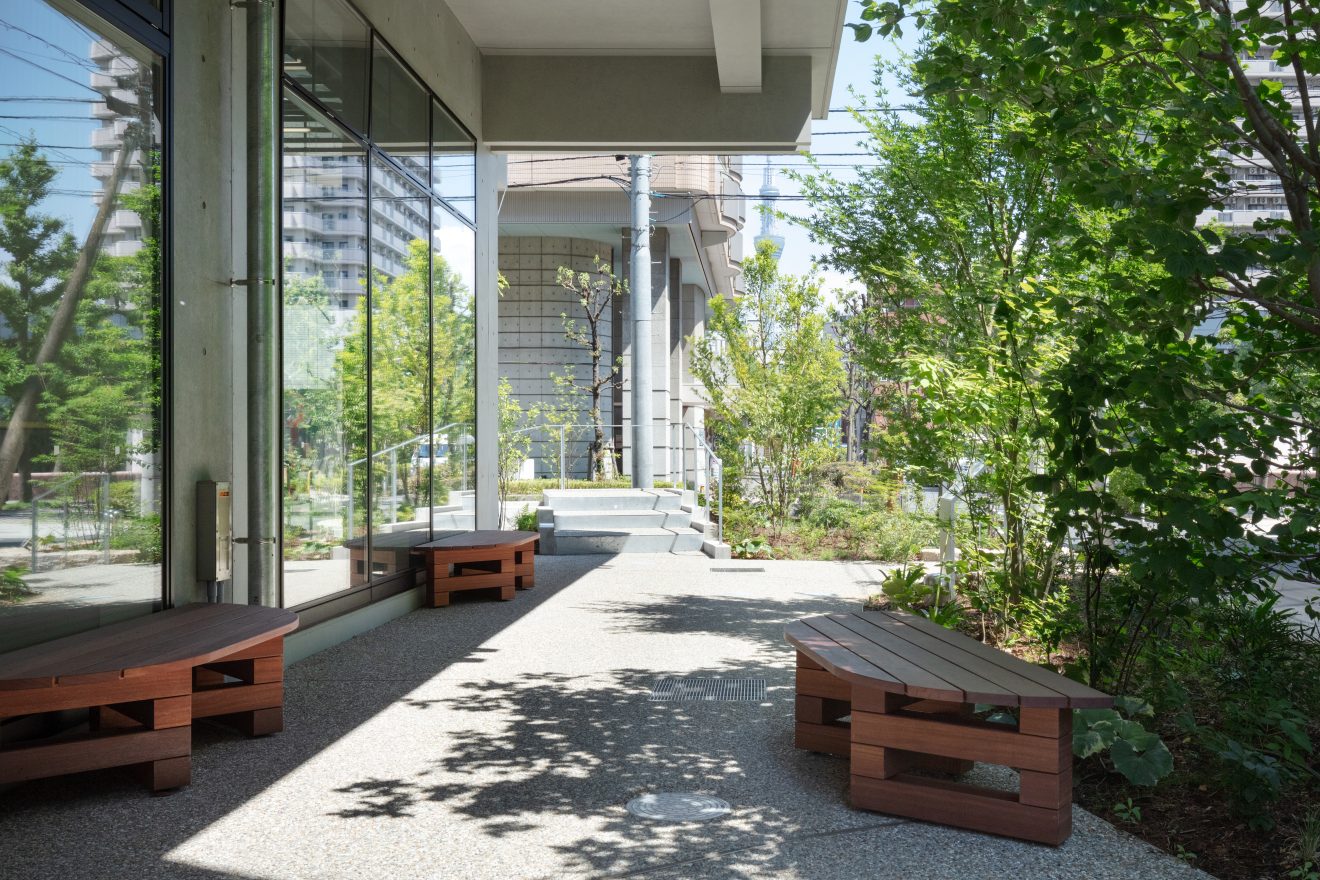
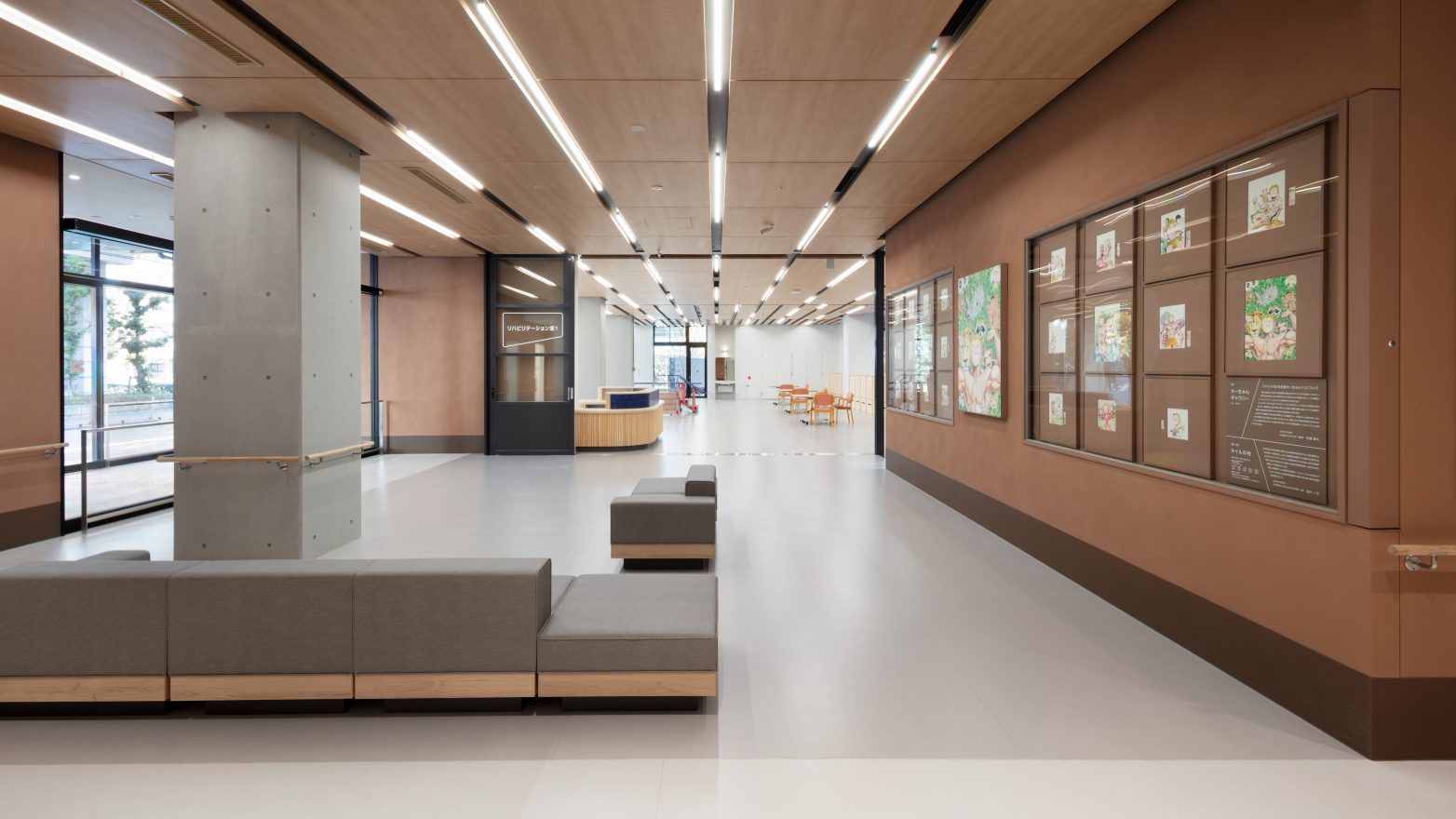
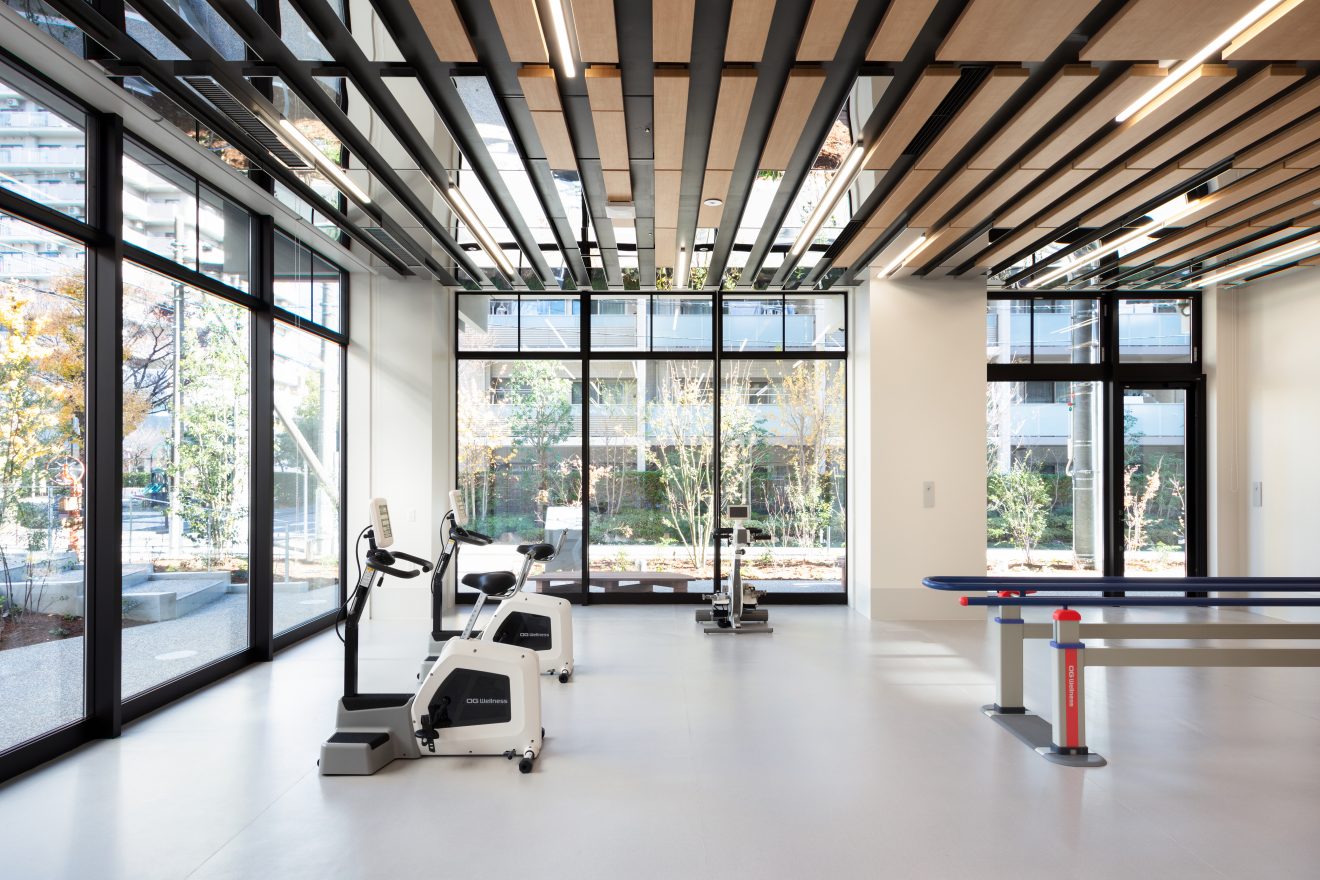
The first floor features a rehabilitation room with a garden and large openings to balance training and healing while incorporating the natural environment outside. The garden’s walking paths are deliberately designed with steps and slopes to provide a space for walking practice akin to real-life conditions. What’s more, by treating the entrance hall as an extension of the rehabilitation space, the design embodies the philosophy of integrating rehabilitation into everyday life.
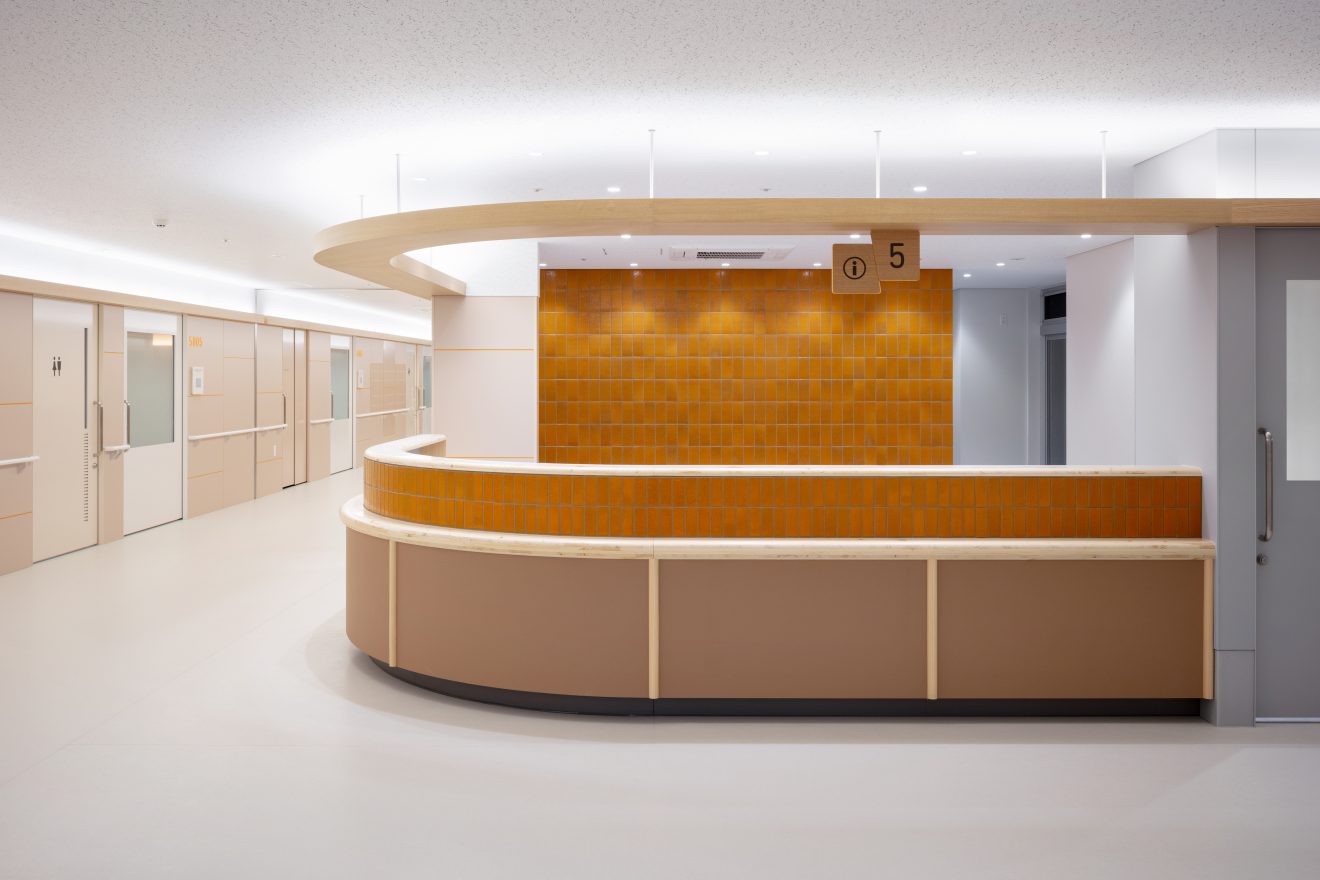
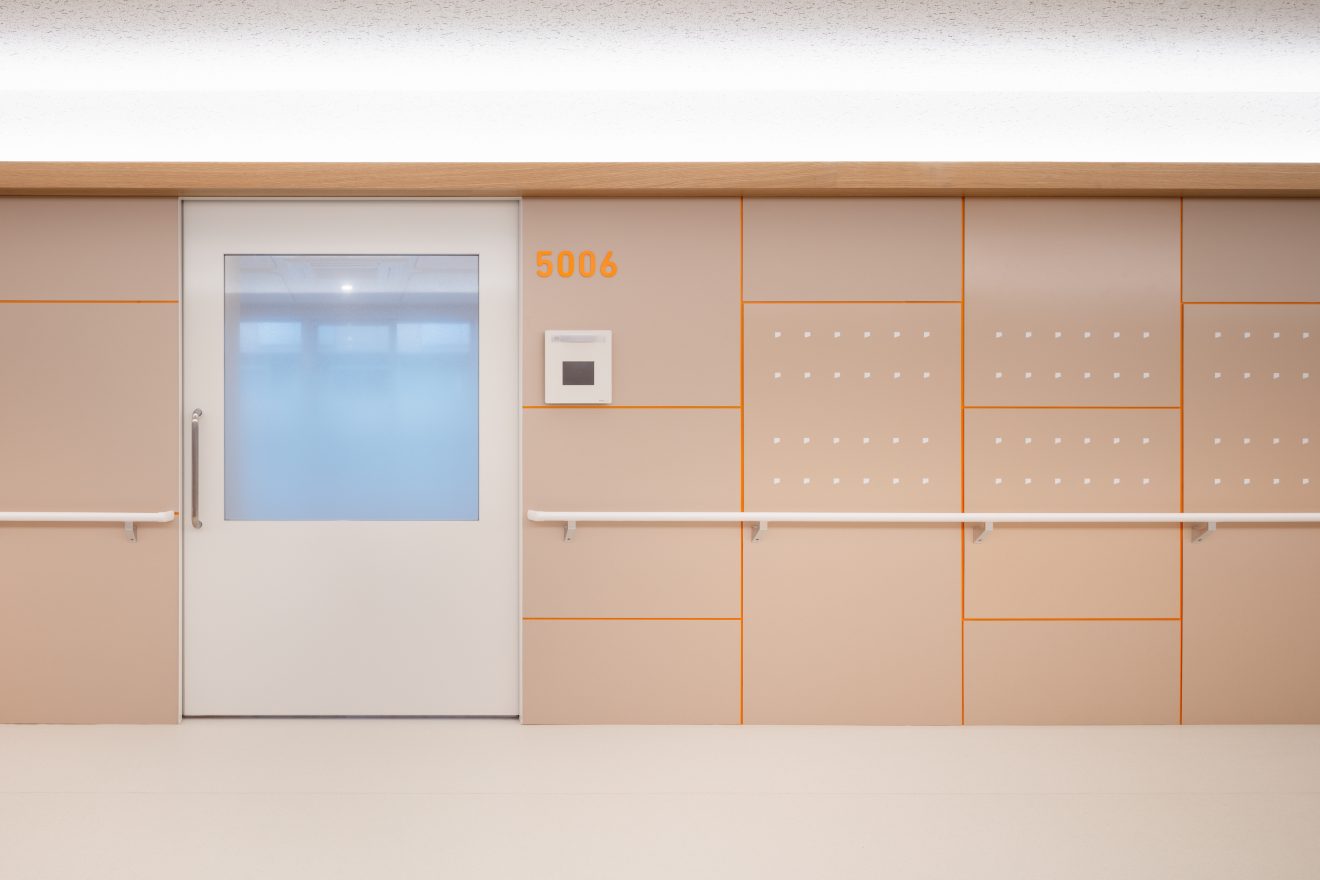
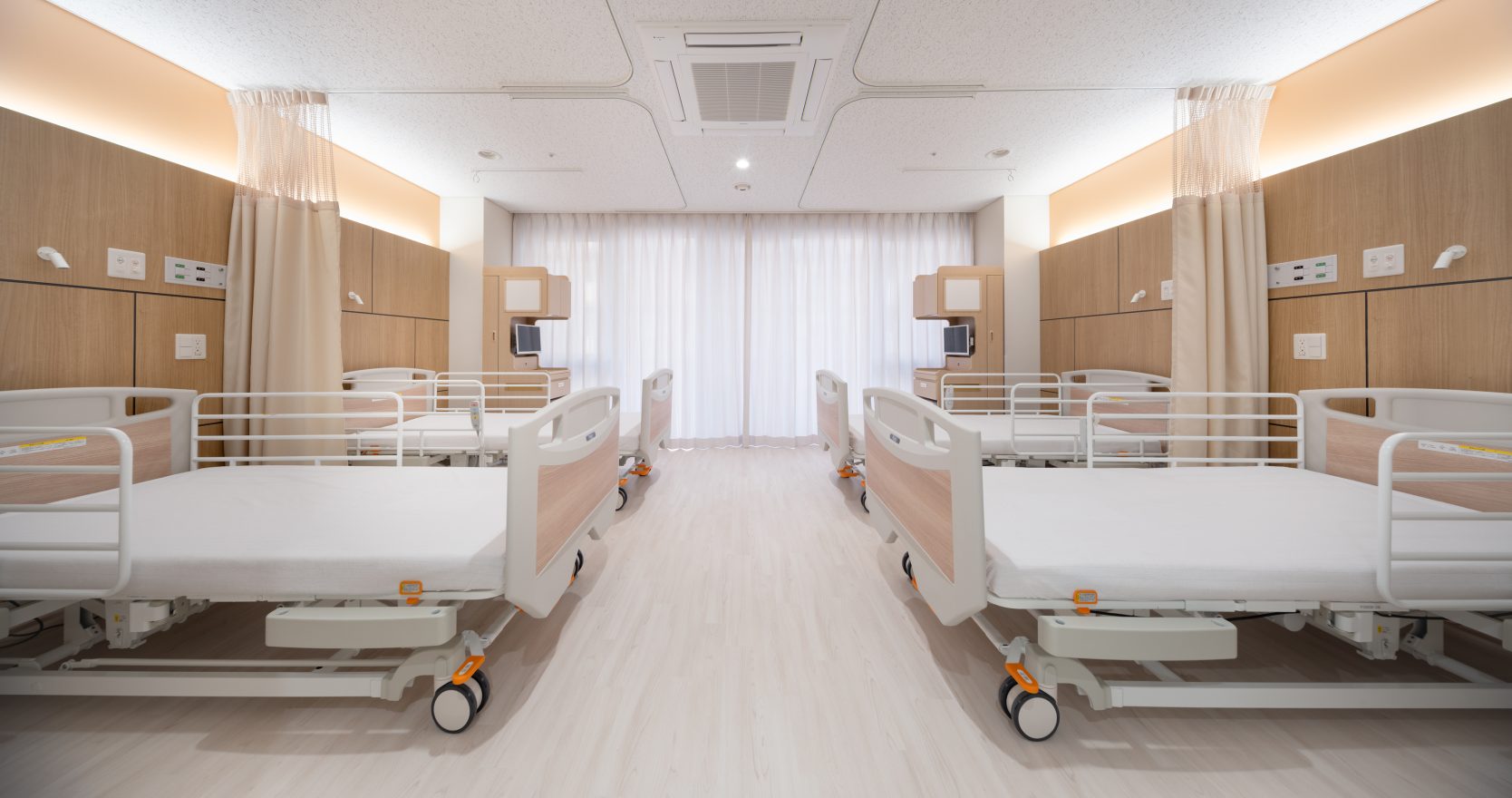
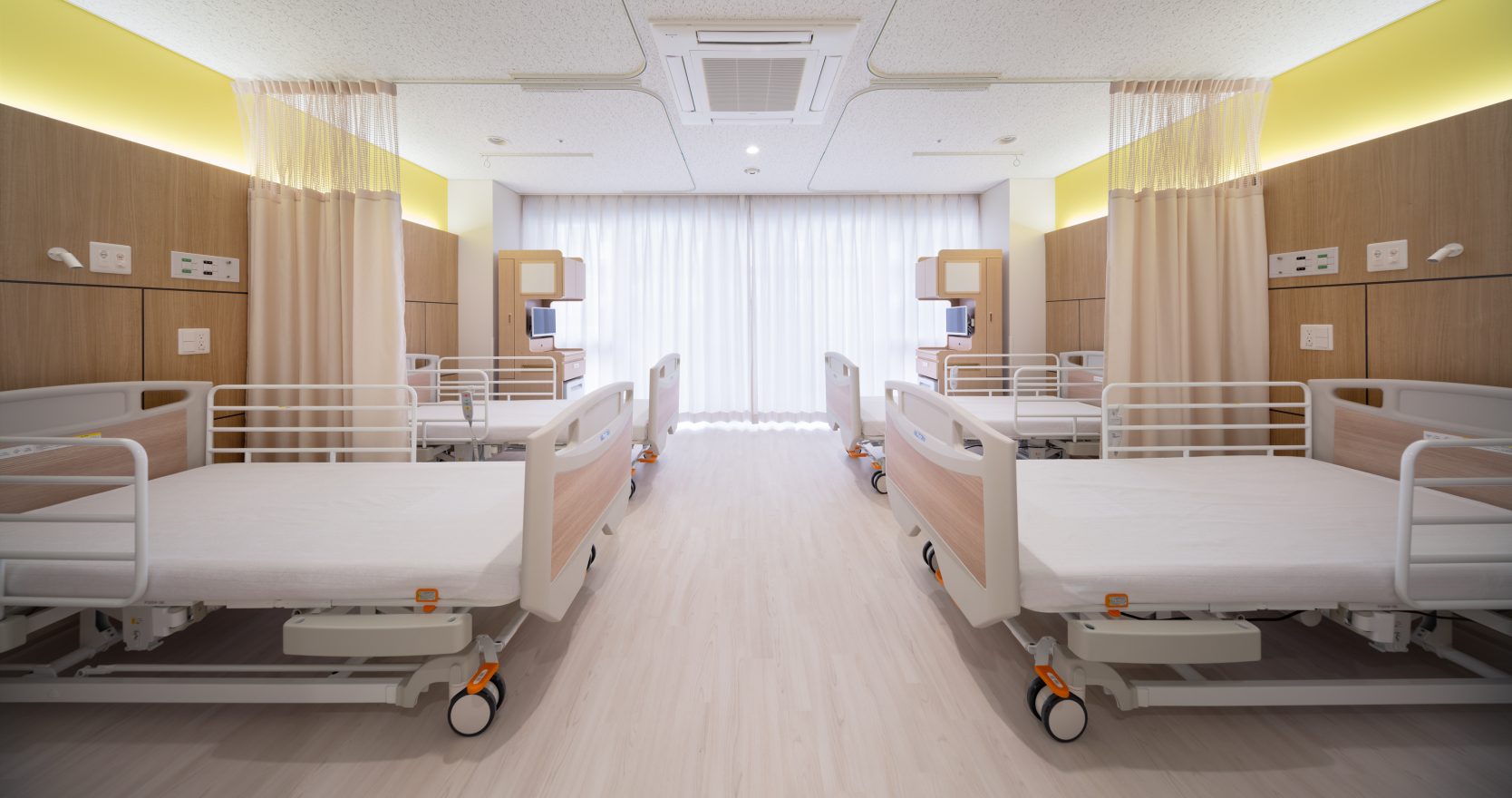
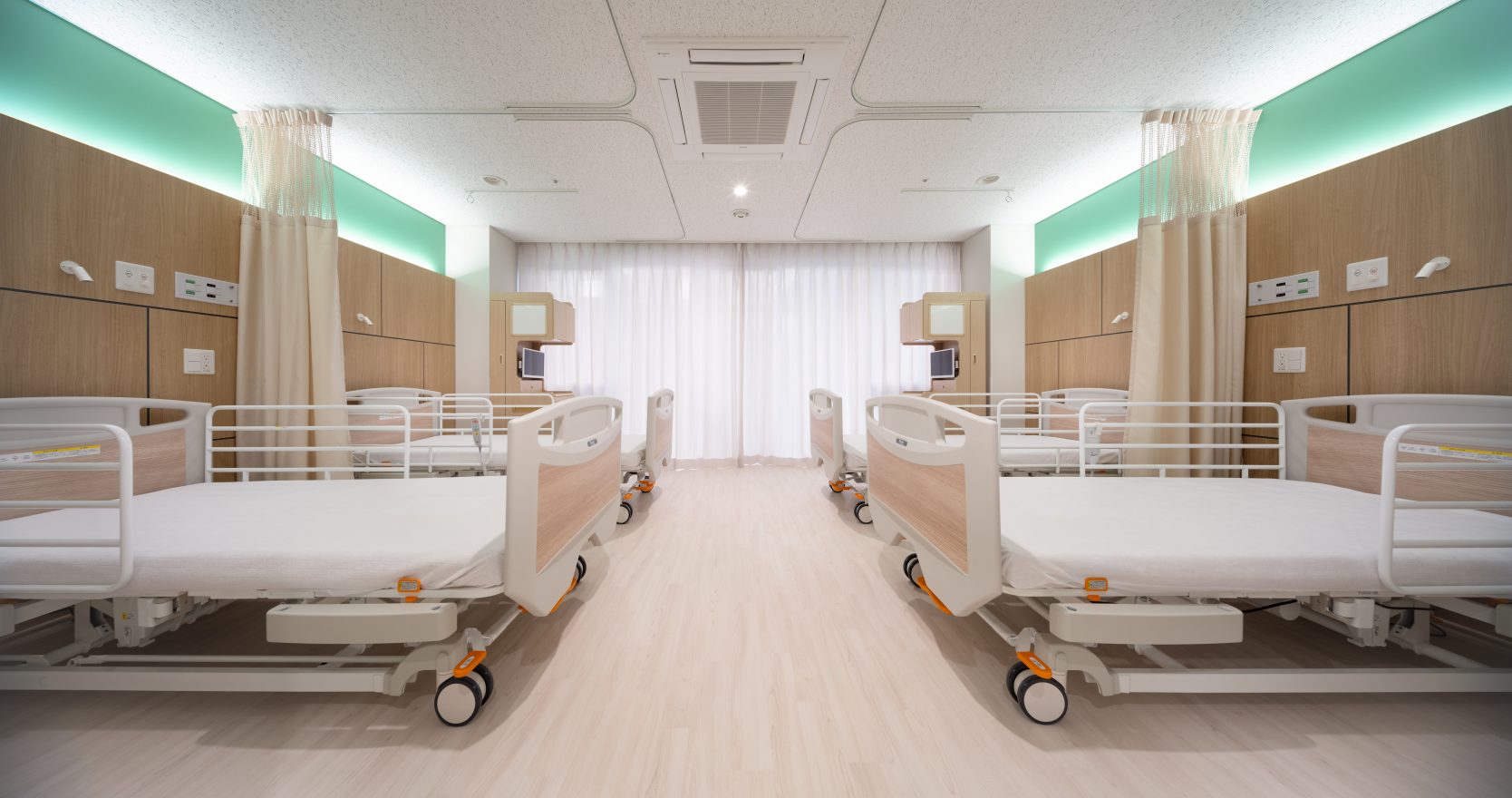
The general wards on the second to fifth floors are designed around the theme of “regeneration,” with walls finished in a motif inspired by “kintsugi” (the Japanese art of repairing broken pottery with gold). Each floor is distinguished by different color schemes to ensure patients and visitors can navigate easily.
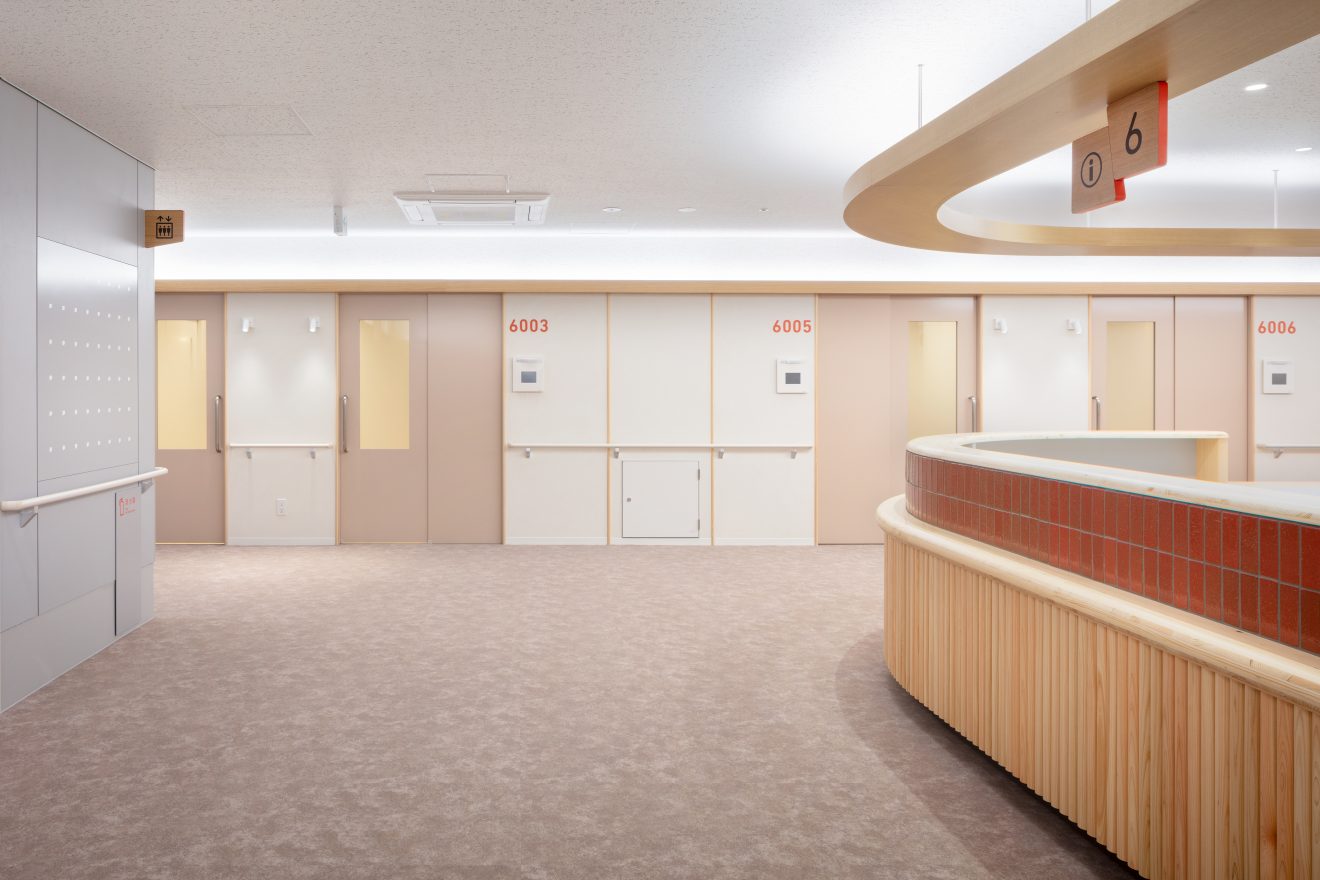
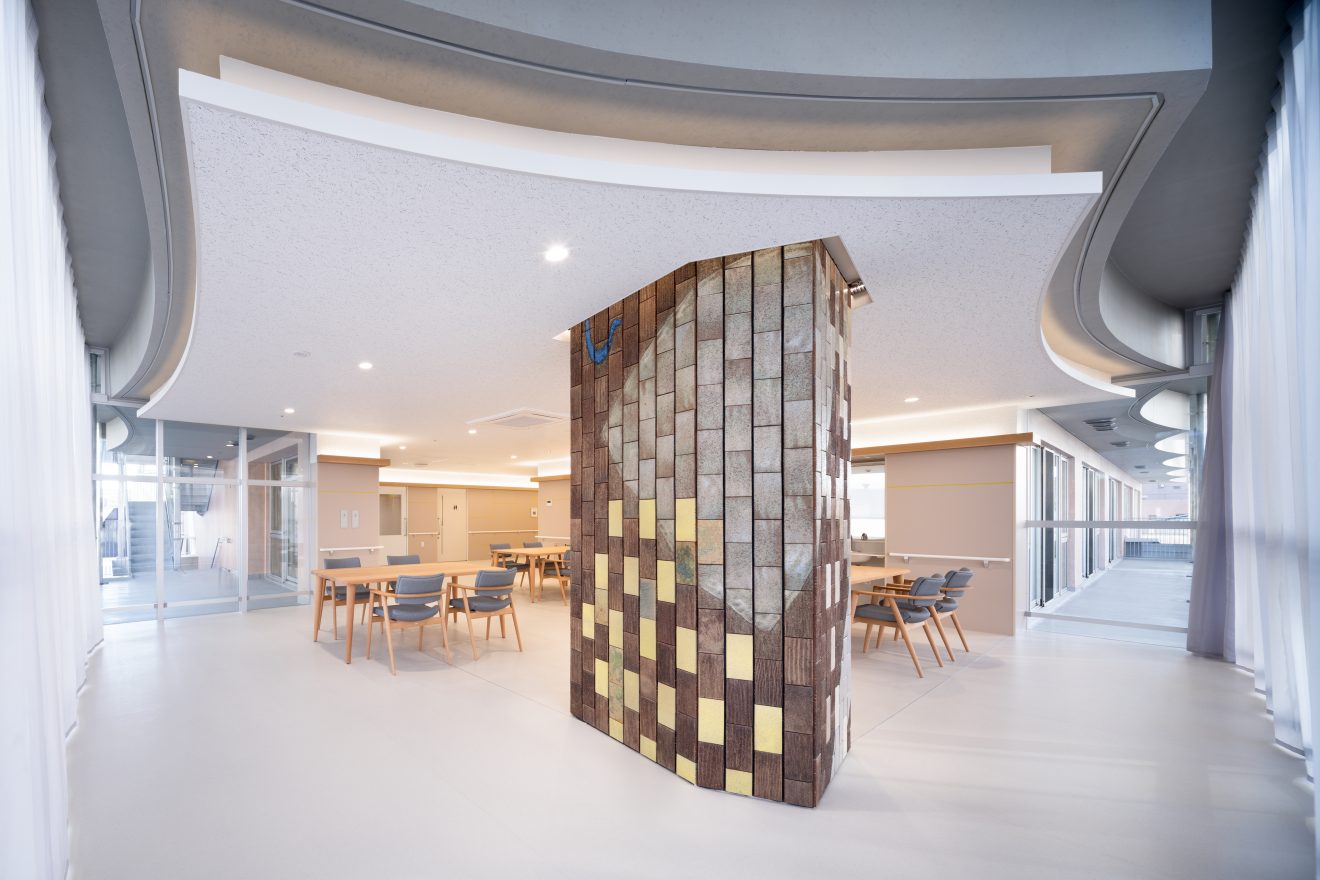
In terms of layout, a dining room/lounge area has been placed on the northeast side where a park offers open views, allowing patients to enjoy the scenery through large windows. A staff station has been placed in the center, ensuring easy access to each patient room.
The lighting plan employs indirect lighting to minimize harsh contrasts between light and shadow, creating a gentle, healing environment that helps patients feel at ease even during the daily challenges of rehabilitation.
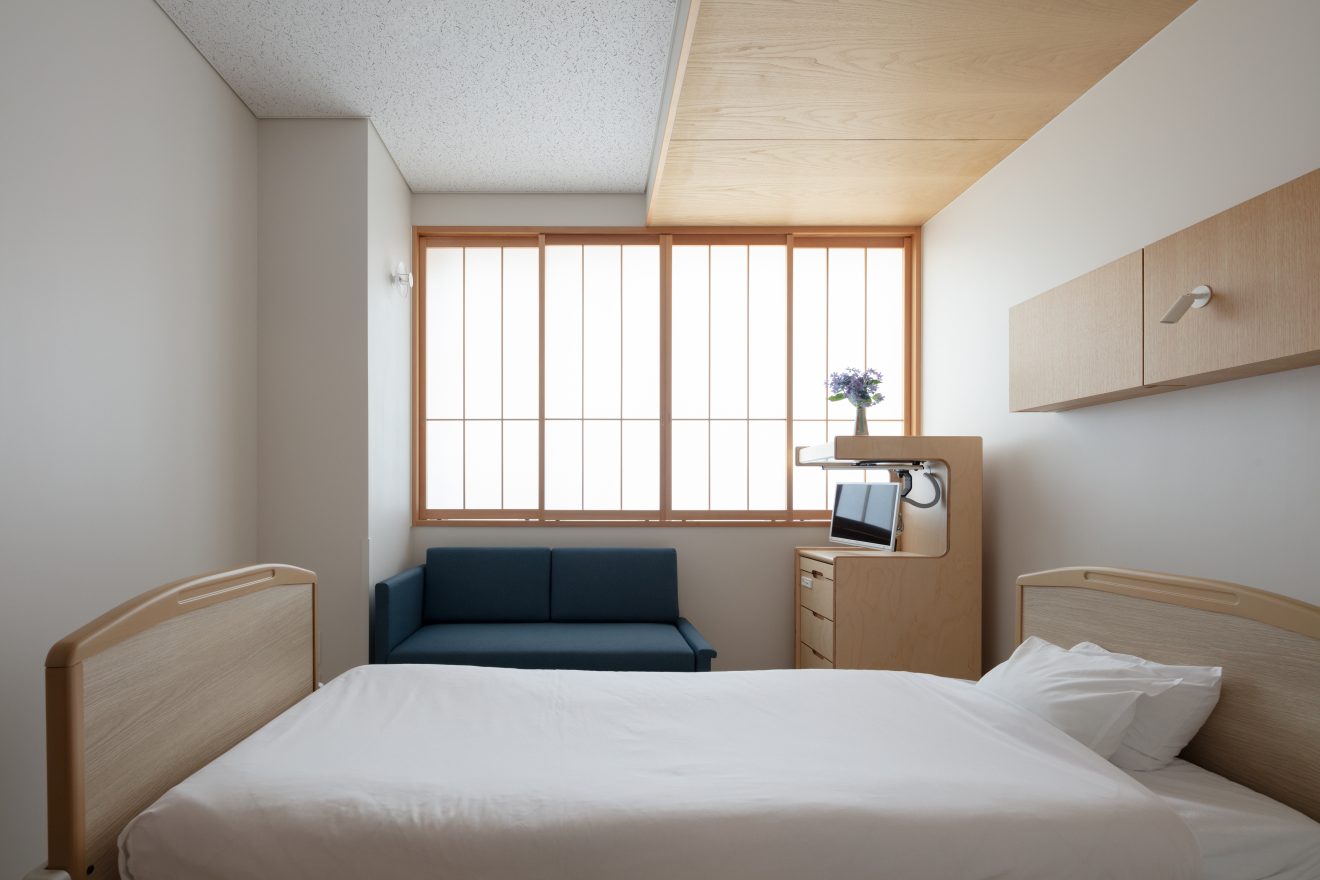
The palliative care ward on the sixth floor incorporates natural materials such as wood, paper, and plaster as accents, creating a space that feels connected to everyday life.
Medical equipment, such as gas and suction outlets, is concealed within cabinets to minimize the clinical feel of the hospital environment.
Like the general wards, the palliative care ward uses indirect lighting for a soothing atmosphere and incorporates a circadian lighting system to replicate the natural progression of light, even indoors.
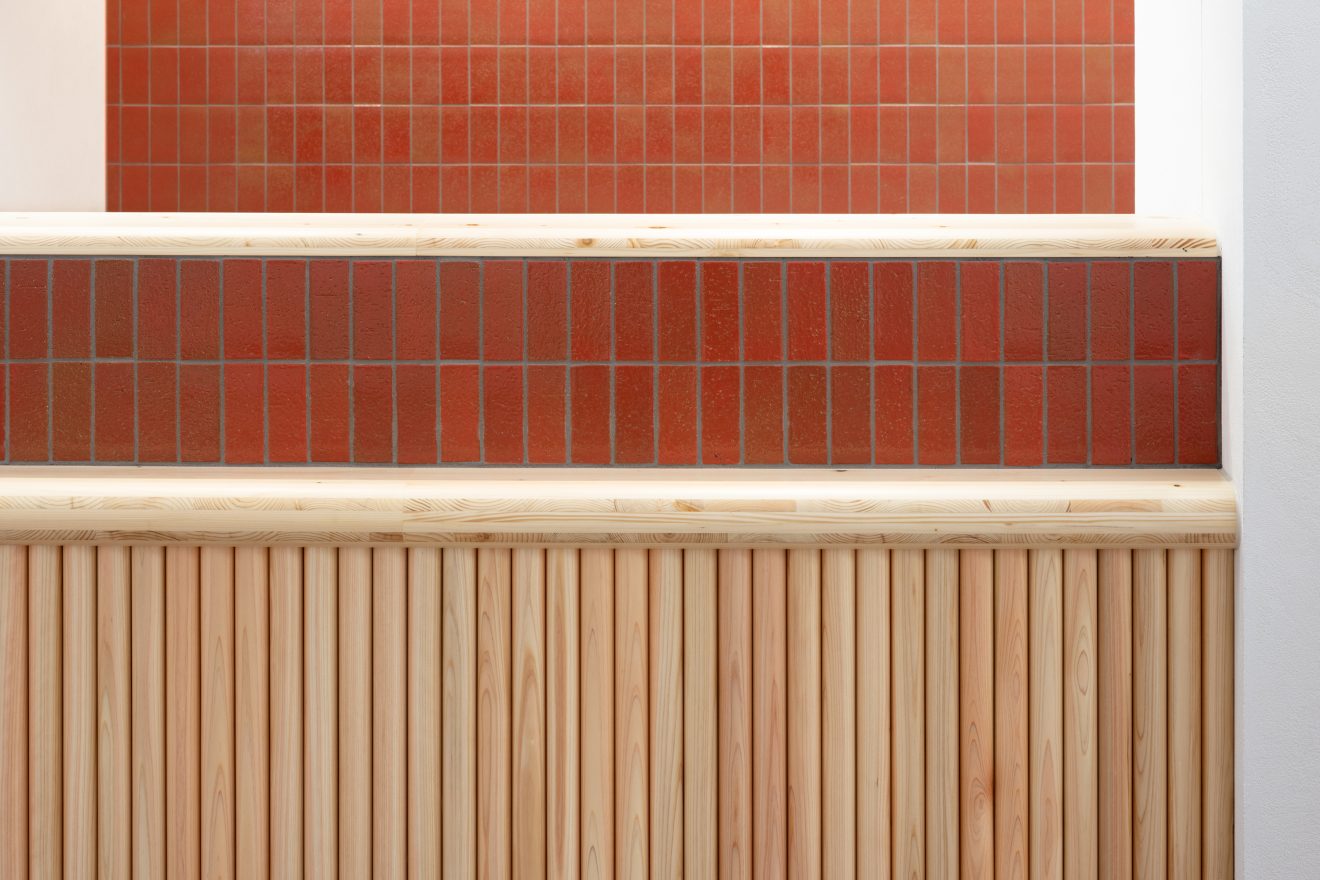
As a symbol of community connection, columns in the dining and lounge areas on each floor feature artistic tile pillars shaped like giant trees, crafted collaboratively by pottery artisans from Tokoname, Aichi Prefecture, and local welfare organizations.
In terms of infrastructure, the facilities’ plan splits the air conditioning system between electric and gas heat sources to reduce risks during emergencies.
To address flood risks, a water tank has been installed on the roof to ensure water supply in the event of an outage.
Inheriting the hospital’s long history while embodying a more open approach to future healthcare, Asoka Hospital’s South Wing presents a model for sustainable urban hospitals.